
Platform · Trading
Multi-asset OMS and EMS: five channels, one order book, risk checked first
Web, mobile, FIX/DMA, REST API and the dealer terminal share one order book, one pre-trade risk check and one routing path, to the market or to your own book.
In short
ZagTrader is a multi-asset OMS and EMS for brokers, banks and market makers: orders from web, mobile, FIX and DMA, REST API and the dealer terminal pass one four-stage risk check and one routing path, to the market or to your own book. It reaches 1,100+ destinations through ZagFN and handles 10M+ transactions a day for 100+ institutions.
- Order channels
- Web, mobile, FIX/DMA, API, dealer terminal
- Routing destinations
- 1,100+ through ZagFN
- Daily transactions
- 10M+
What heads of trading ask first
How orders come in, how risk is checked and where flow goes.
Five channels, one order book
Web, mobile, FIX and DMA, REST API and the dealer terminal share one order book, risk model and audit trail.
See front endsRisk checked before the order leaves
User, broker, instrument and market checks enforce buying power, holdings, restrictions and exposure at order entry.
See risk and complianceA-book, B-book and RFQ
Route flow to the market or internalise it per client or instrument, and quote bilaterally with auto-quoting and auto-hedging.
See execution modelsAlgorithms and advanced orders
VWAP, TWAP, POV and iceberg orders, plus baskets, cross trades and IPO subscriptions handled natively.
See execution algorithmsGlobal market access
Certified FIX routing out and DMA in, drop copy and multiple FIX engines, reaching 1,100+ destinations over ZagFN.
See connectivityStraight through to the back office
Each order flows on one path from entry to settlement, so positions, cash and the ledger stay current.
See custody and back officeThe platform in action
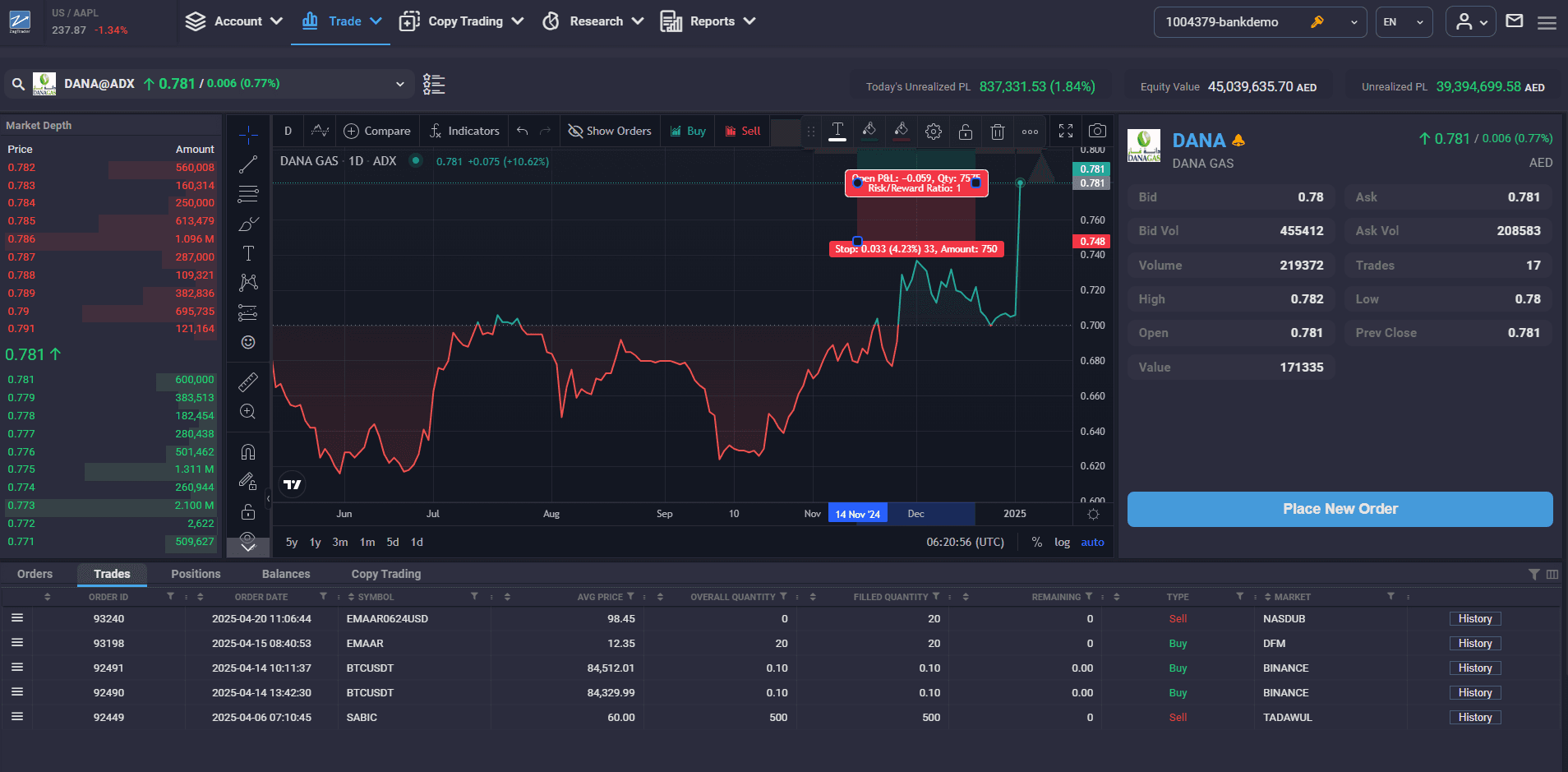
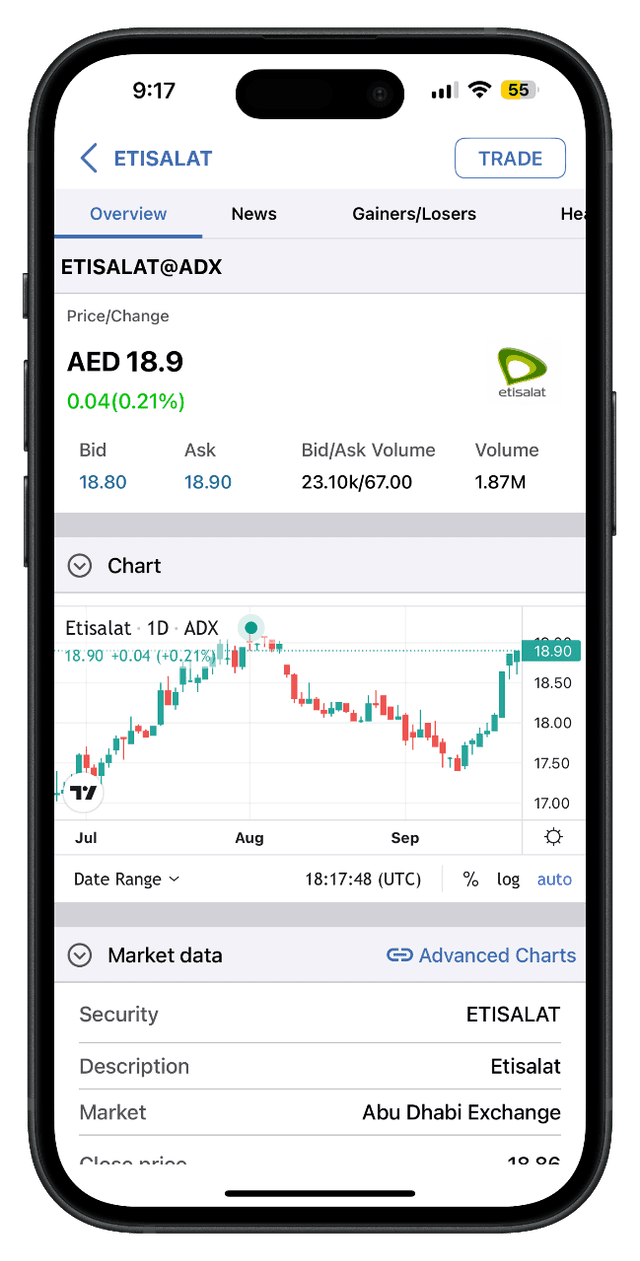
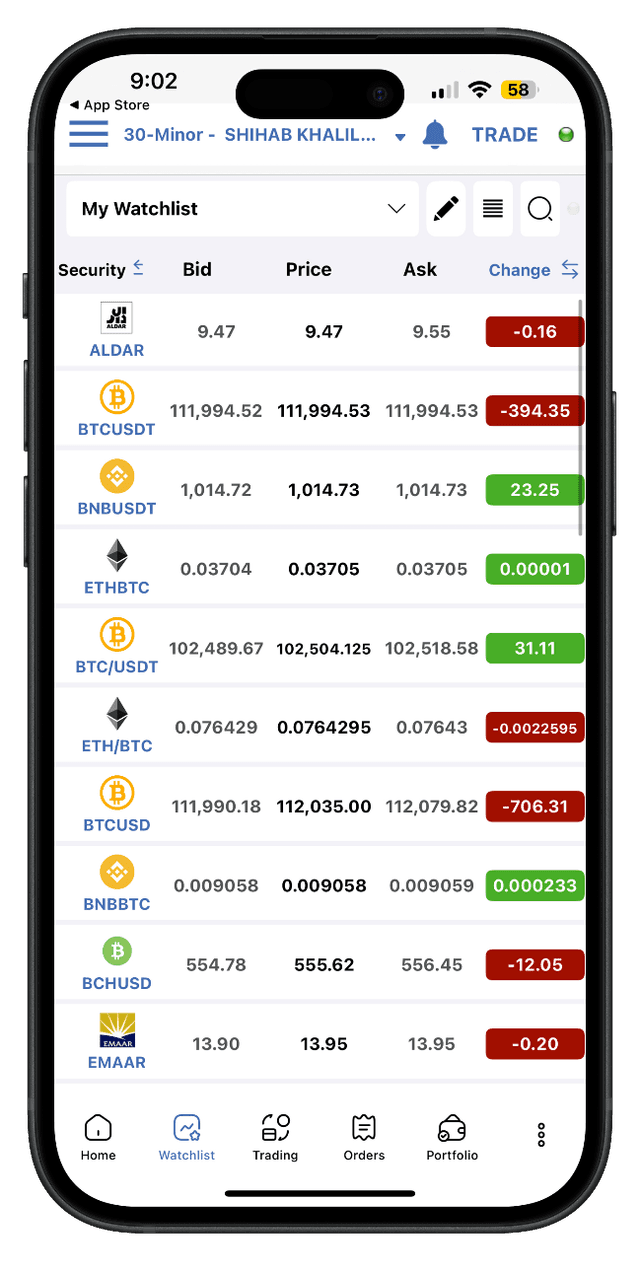
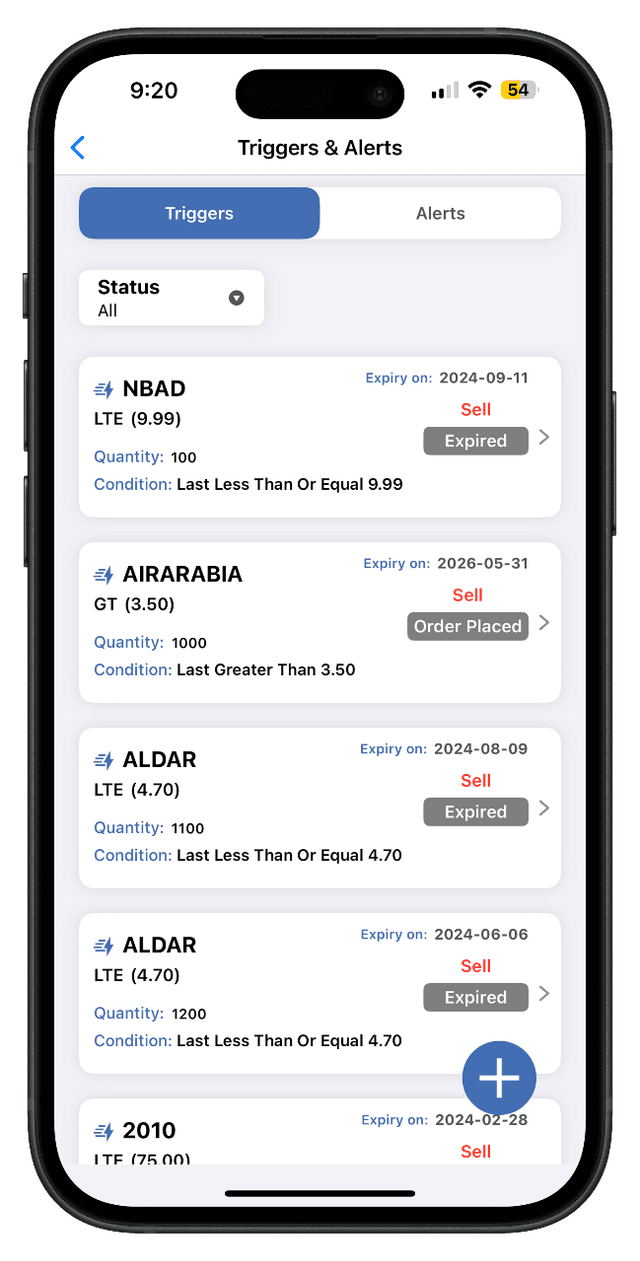
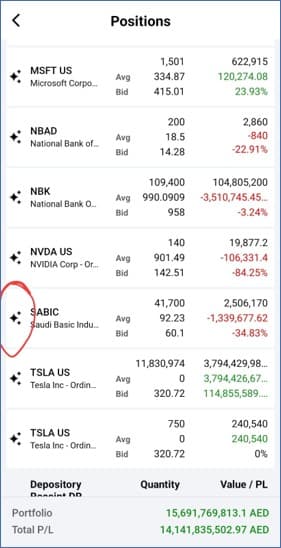
The same order book on the desktop and on the phone.
Orders, risk and routing in detail
Everything the summary above points to, one row per capability. Algorithms, front ends and connectivity each have their own page.
| Capability | What you get |
|---|---|
| Built for | Heads of trading, brokers and broker-dealers, market makers and liquidity providers, and the technology and operations leaders who want one system instead of one per channel and asset class. |
| Order channels | Web portal for self-directed and advised clients; native mobile app for trading on the move; FIX/DMA gateway for institutional and low-latency flow; REST API for custom front ends and system-to-system integration; dealer terminal for desk and dealing-room operators. |
| Order types and time in force | Market and Limit orders for immediate or price-controlled execution, Stop and Stop-Limit orders for protective and breakout strategies, and Day, GTC, GTD, IOC and FOK time in force, with the same behaviour on every channel and asset class. |
| Four pre-trade stages | User: permissions, limits and buying power. Broker: credit, exposure and house policy. Instrument: holdings, restrictions and eligibility. Market: venue rules and tradability. An order that fails any stage never reaches the market. |
| Routing and execution models | Smart order routing with real-time analytics; A-book routing to external venues or B-book internalisation, chosen per client or per instrument; real-time positions and exposure across desks, clients and asset classes. |
| Advanced orders | Cross trades that match two clients internally, IPO subscription handling and allocation, basket and program trading across many names at once, algorithmic orders for controlled, scheduled execution, and iceberg orders that hide full size from the market. |
| Triggers and price alerts | Watch price conditions and either notify or auto-execute a buy or sell when the condition is met, with stop instructions, priority levels and an e-mail on execution. |
| RFQ and OTC | Request quotes from external counterparties for OTC trades, with systematic auto-quoting, response-expiry windows and auto-hedging, for client-facing or internal flow. |
| Integration and market data | Industry-standard FIX/DMA and REST connections to markets, counterparties and internal systems, with real-time and historical market data from major providers. |
Frequently asked questions
Which asset classes trade through the platform?
Equities, fixed income, FX, listed and OTC derivatives, funds and digital assets all trade through the same engine, so one platform covers the whole book instead of a tool per asset class.
Which order types and time-in-force options are supported?
Market, Limit, Stop and Stop-Limit orders, with Day, GTC, GTD, IOC and FOK time-in-force, consistent across every channel. Price triggers can alert or auto-execute when a condition is met.
How do institutional clients connect?
Through the FIX/DMA gateway for institutional and low-latency flow, the REST API for custom front ends and system-to-system links, and drop copy for oversight. Banks also route through Bloomberg EMSX and FIX.
Can we internalise flow instead of sending it to the market?
Yes. Choose A-book (route to external venues) or B-book (internalise against your own book) per client or per instrument, and use RFQ for quote-driven trading with response-expiry windows and auto-hedging.
Does it include smart order routing across venues?
Yes. Smart order routing with real-time analytics directs orders across multiple venues, for equities, FX, listed and OTC derivatives, fixed income, funds and digital assets alike. Through ZagFN the same routing path reaches 1,100+ brokers, banks, exchanges and venues, and every order clears the four-stage pre-trade check before it leaves. Large orders can also be worked with VWAP, TWAP, POV and iceberg algorithms.
Can one platform handle OMS and EMS for equities, options and futures?
Yes. Order management and execution run in one engine, so an equity order, an option picked from a live chain and a futures contract share the same order book, pre-trade checks, routing and audit trail. Futures and options are then marked to the settlement price daily and closed, exercised or settled automatically at expiry, on the same ledger as the cash business.
How does it connect to multiple brokers over FIX?
The FIX gateway runs multiple FIX engines and counterparty sessions in parallel, with redundant sessions and automatic reconnection and recovery. Each broker's FIX dialect and custom tags are mapped in the adapter layer, so adding a broker does not change the trading workflow. Drop copy mirrors fills from external brokers for independent risk and reconciliation, and banks can also route through Bloomberg EMSX.
See an order travel from ticket to settlement
Bring your channels, markets and asset classes, and we will walk one order through risk, routing, execution and the books.
100+ institutions run on ZagTrader technology, with $500B+ in client assets on the platform
Institutions that run on ZagTrader technology